“I shall start at the beginning. Though of course, the beginning is never where you think it is.”
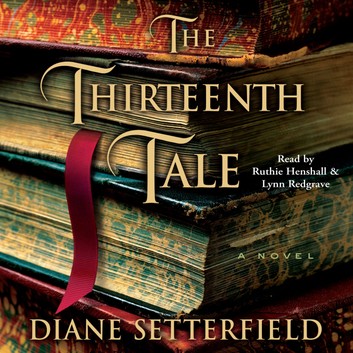
The Thirteenth Tale – a story within a story within a story. A dark, gothic tale of identity interwoven with heartbreak, loss, coming of age, and survival. This is definitely a book for people who love books. The lyrical prose is breathtakingly beautiful. Diane Setterfield is a master wordsmith whose sentences become living breathing entities which cover you in an awe-filled stupor. Her writing is meant to be savored, enjoyed, not devoured too quickly where you miss the flavor.
“There is something about words. In expert hands, manipulated deftly, they take you prisoner. Wind themselves around your limbs like spider silk, and when you are so enthralled you cannot move, they pierce your skin, enter your blood, numb your thoughts. Inside you they work their magic.”
And that is exactly what this novel did – it worked its magic.
Young Margaret Lea is summoned to the home of Ms. Vida Winter, a dying author known for publishing a collection of twelve stories. Before embarking on this adventure, where Margaret has been asked to write the reclusive author’s biography, she reads a rare copy of Ms. Winter’s famous book. This book buries itself into Margaret’s soul, and Ms. Winter’s life story does the same.
“Sometimes when you open the door to the past, what you confront is your destiny.”
I wouldn’t say this book is for everyone, as I sit in the minority group of readers who do not care for Austen nor the Bronte Sisters. (I know, you wish you could shake some sense in me right now, don’t you?) It does have the gothic feel of a Bronte novel, but the richness of the text and the underlying mystery pull you in headfirst. It is not an action-packed story, yet there is something about the tale that continually propels you to the next unveiling of Ms. Winter’s sordid tale – and all the while you see Margaret’s story juxtaposed against its backdrop. (There is another story within the story, but I leave that one for you to figure out.)
While there are elements of female empowerment to the story, the ambiguity of the time period allows this to be a minor theme in the novel. Maybe that’s what stood out the most to me: yes, I am all about empowered women, but I also know we have the ability to achieve success without having to break free of womanhood. I was glad this was not a dominant theme.
Instead, the theme of books and the influence of a story coursed through the veins of this novel. When Ms. Winter gave Margaret a hypothetical choice between humans and books, Margaret’s reaction screamed at me.
“Of course I loved books more than people. Of course I valued “Jane Eyre” over the anonymous stranger…Of course all of Shakespeare was worth more than a human life.”
I know that sounds harsh and inhumane, but don’t forget how the Nazi’s first burned books BEFORE they burned people. And the oxymoronity of the statement itself rings true: it takes a person to write a book, yet the book is vital to society – does that make it more so than the person. Dwelling here could make me go mad.
Books are important to me – and if you are reading this review, I’ll make the leap to dare say they are to you as well. As Ms. Winter’s story unfolds, it also circles back around to give us her answer to what turns out to be a not so hypothetical question after all.
But in the end, all that remains is the story – words on a page – long after the writer has transferred his or her physical life to an eternal homestead. And with that, I leave you with a final quote from The Thirteenth Tale:
“Do they sense it, these dead writers, when their books are read? Does a pinprick of light appear in their darkness? Is their soul stirred by the feather touch of another mind reading theirs? I do hope so.”
As do I, Margaret. As do I.
An Unsolicited Review
Until Next Time,
Alicia
 Peace In The Margins
Leave a comment